About Me

My photo
As I speak internationally to English speakers as well as through an interpreter, some of my greatest joys have been speaking to groups where participation from the audience is possible. Not only do I value the input of those in my conferences, but if they are actively involved (share testimonies, participate in prayer, read Scripture aloud), it is obvious that everyone is with me. I am interested in theological study, Christian writing, historical application of Biblical principles as well as writing as a craft and the current status of the publishing industry as a whole. As a result, I find myself following blogs of those whom I have learned to trust who contribute information in those fields. It occurred to me that blogs are the internet equivalent of audience participation in a conference setting. So, this blog is a result of that discovery. As much as possible (sometimes when I travel I do not have internet access), I will be making weekly posts of how everyday life is related to what God has revealed about Himself in His Word - maintaining one focus on that most important relationship. I would welcome your participation.

Thursday, October 24, 2013

Pulling Weeds


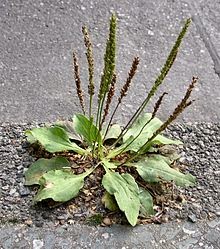
In my garden, I have encountered a variety of weeds. Many of them are very hardy. Some have a single root. If that weed is pulled out by the root, wonderful! If not, it will come back. Others have complex root systems that make them next to impossible to pull out. They must be dug out. In those cases, I remember that the Lord said He was going to leave the tares and the wheat to grow together, and do the weeding at the end of time. Sometimes I make a similar decision. I will deal with those weeds again and again in order to save the good plants that are growing close to them.
The task of weeding reminds me of sin. Maybe you, like me, have discovered that weeding, like ridding your life of sin, involves the following.
Weeding is backbreaking work. If I don’t stay alert and “prayed up,” sin keeps coming back. If I don’t keep up with the weeding, the weeds overtake the garden. Vigilance is the key. Bill Gaither says there is a plaque on the wall of his home in Alexandria, Indiana that summed up his parents’ attitude about
 faith, “Pray for rain, but keep hoeing.”


It helps if the weeds can be pulled up by the roots. If possible, it is best to stop sin at its source. For instance, my nature is to panic and be fearful of unknown situations. That is the opposite of faith. When fear raises its ugly head in my life, I have to go back to the basics and trust God.
Sometimes I need help. The task of weeding is a bit overwhelming sometimes, especially since my husband and I travel much of the year. Occasionally someone will sit with me and help me pull out weeds. Likewise, an accountability partner can often notice an area that is displeasing to God that I have overlooked.
Weeding is easier if the soil is soft or wet. If you ever tried to pull weeds in hard, dry soil, you know how hard it can be. Likewise, it is easier to dispose of sin when it is fresh and recognizable as sin. The longer sin is left to harden in our lives, the harder it is to remove.
As I work in my flower beds, I often reflect on the fact that Jesus gave many illustrations using seeds, trees, fruit, plants, sowing, pruning and reaping. As a result of the fall, the ground was cursed and work became an effort instead of a joy. There remains, however, the beauty of God’s creation all around us. If we are privileged enough to have the stewardship of a plot of earth in which we can sow and reap, then we partner with God in His garden enterprise.
Weeding, both in my garden and in my life, is well worth it. As I observe the flowers in my garden, I am reminded that a garden is not just one flower. It is many flowers. You and I are part of a big garden that God has planted. Flowers need attention. But don’t we love the attention our Heavenly Gardener showers on us? We are linked to His Living Vine. We need each other. Together we can “bloom where we are planted” so that others can see Jesus in us.
Oh, the joys of those who . . . delight in doing everything the Lord wants. . . . They are like trees planted along the riverbank, bearing fruit each season without fail. Their leaves never wither, and in all they do, they prosper (Psalm 1:2-3 NLT).

Sunday, October 13, 2013

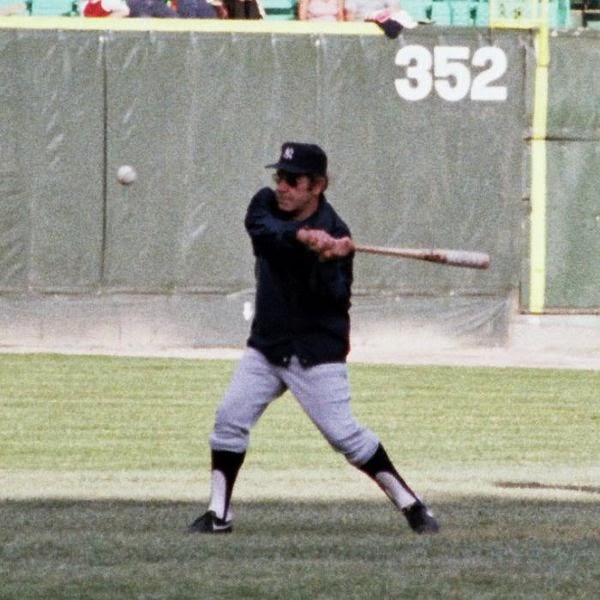
The Wit and Wisdom of Yogi Berra

If you live in America, you may have quoted a "Yogi-ism" and not even have known it. If you have ever quipped, "It's deja vu all over again" or "it ain't over 'til it's over," you quoted Yogi Berra. One of the few baseball managers to have won pennants in both the American and National Leagues and elected to the National Baseball Hall of Fame in 1972, Yogi is as well known for his sayings as his famous coaching.

Yogi was a talker. During baseball games, Yogi talked to the opposing batters in order to distract them. Although his response to his reputation for originating so many quotable sayings has been, "I never said most of the things I said," he doesn't seem to mind being quoted so often!

Since I travel so much, one of my favorite Yogi quotes is "Why buy good luggage? You only use it when you travel."

Yogi said, "If you don't know where you're going, you'll wind up somewhere else." He may not have
intentionally been referring to eternity, but it certainly applies. After death, there are only two possible destinations - heaven or hell. Those who trust in Jesus Christ as Savior and Lord can know they are going to heaven when they die. Those who don't trust Him are going to wind up somewhere else.

And this is the testimony: that God has given us eternal life, and this life is in His son. He who has the Son has life; he who does not have the Son of God does not have life. These things I have written to you who believe in the name of the Son of God, that you may know that you have eternal life, and that you may continue to believe in the name of the Son of God (1 John 5:11-13).

Thursday, October 3, 2013

Remember When?

After my parents and my husband's parents died, I browsed through countless photos. Many of them produced questions in my mind. Who were all the people in those pictures and what was life like for them? Were we related and if so, how? Have I been influenced by their lives? If so, in what way?

Some of those old photos brought back memories. Even as I pull up Facebook or read a family member's blog, many of the posted pictures bring back memories. Scrolling through my photo album on my laptop does the same thing. More recent than the old family photos, they still remind me of something that has happened in the past.

Often an item in my home brings back memories. If it was a gift, it reminds me of the giver and the occasion when I received it. If it was something I saved for, it reminds me of the time and effort put in to acquire it. If it was something that was an incredible bargain, it reminds me of how God has provided for me over the years.

Memories can be therapeutic or painful. Some memories bring great distress while others produce joy. Sometimes memories are a bit faulty. The good old days didn't seem so good while we were in them; however, looking back reveals that change and progress were not always what we had hoped for.

Memories help put life in perspective sometimes resulting in a desire to return to a slower, simpler life. Remember when children played outside instead of hanging out in front of a television set? Remember when prices of gas were so much cheaper? Remember when people walked to the store because there was a local store available to walk to? Remember when a piece of pie did not put on three extra pounds? Remember when life was not so complicated?

Memories link our past with our present helping us learn from our mistakes, sometimes turning painful experiences into an empathetic understanding of others and often producing smiles when times of family, fun and fellowship come to mind. That is why Alzheimer's disease is so devastating. Ties to the past are lost even resulting in being unable to recognize a loved one.

God knows the value of memories. Memories of our sins against Him should prevent us from doing the same thing again and the memory of our salvation experience should cause us to give thanks to Him every day.

One of the greatest values of memories is reflecting on the trustworthiness of God. I cherish the memories of every instance where He has shown me His love. He has always been there for me and He always will be. You can count on Him as well.

Then they remembered that God was their rock and the Most High their Redeemer (Psalm 78:35). He has made His wonderful works to be remembered; the Lord is gracious and full of compassion (Psalm 111:4). I remember the days of old; I meditate on all Your works; I muse on the works of Your hand (Psalm 143:5).

Thursday, September 26, 2013

A Legacy of Faith

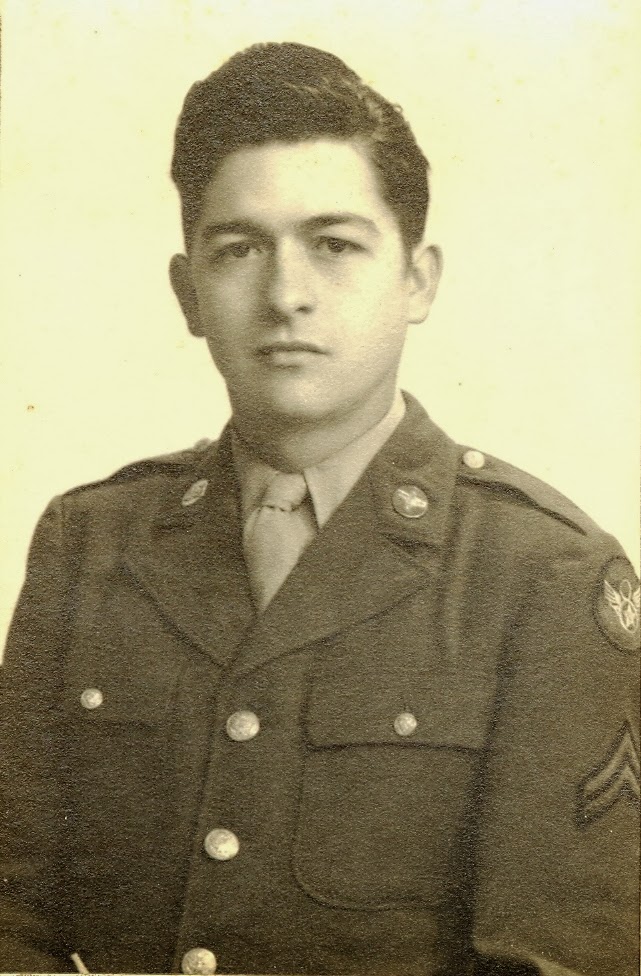
Today my Dad would have been 96. He lived through the Great Depression and World War II. God allowed him to live to 90. Had he kept a diary, it would have recorded an incredible amount of changes during his lifetime.

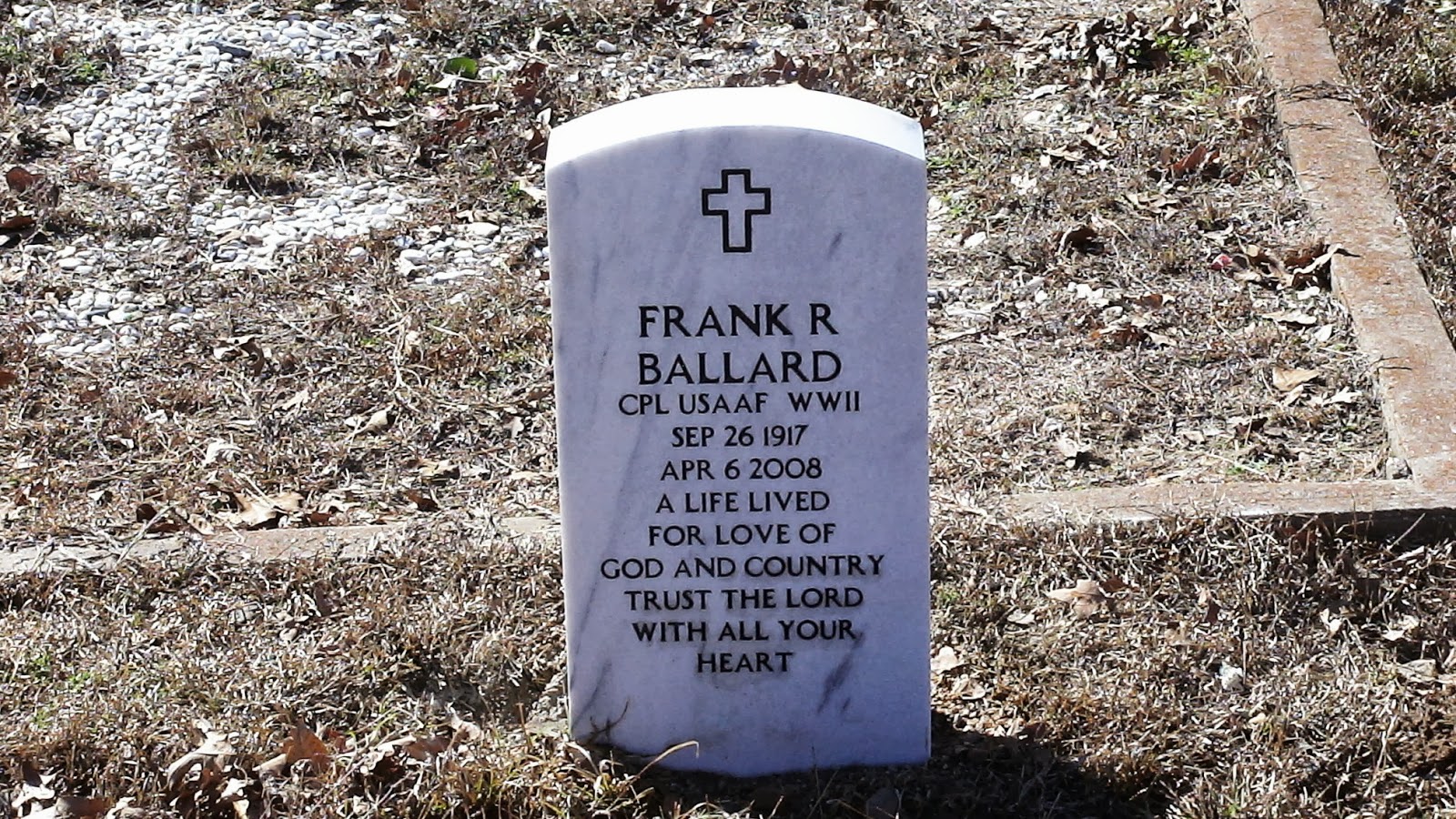
Dad had a love for family, a frugal nature and an abiding faith. "A life lived for love of God and country" was engraved on his tombstone.

When I went through his belongings after he died, it was like a journey back through my own life. He kept every picture, every letter, every gift I had ever given him - sometimes making notations of how he felt when he received them. My dad took special care to express his love to me - especially in his later years.

Like many of his generation, Dad watched every penny. He didn't replace things. He fixed them. If he needed something, he often built it out of materials he already had. When my husband discovered Dad had repaired the seat in his recliner with a piece of plywood, he bought Dad a new one. Dad would probably have never purchased a new one even if he had the money.

His mother instilled in him a love for God that dominated everything he did. As far back as I can remember, Dad was looking for the second coming of the Lord Jesus. He felt confident it would happen in his lifetime. His favorite biblical subject was prophecy and he poured over every reference in the Old and New Testament to it. He was in his eighties when he wrote a book, The Unveiling: How the Symbols of Prophecy Reveal What Happens in the Last Days. 

I miss my Dad. His legacy lives on. I will see him again.

I will always remember that his favorite verse was Trust in the Lord with all your heart and do not lean on your own understanding. In all your ways acknowledge Him, and He will make your paths straight (Proverbs 3:5-6).


Wednesday, September 18, 2013

The Center


I am intrigued by how one word in the English language can have so many meanings. Take the word "center" for instance.

As a noun, we use that word in many ways.

We refer to someone wanting to be the center of attention; someone we deeply love as the center of our world, an important place being a center of influence, or the point or focus of discussion being the center of debate.

In sports, we refer to the middle player on the basketball team as a center. In baseball, the center fielder is the outfielder who plays defense in center field - the baseball fielding position between left field and right field. Center is a position held in American and Canadian football. He is the player who passes (or snaps) the ball between his legs to the quarterback at the start of each play. He is the innermost lineman of the offensive line on a football team's offense.

Centre (British spelling) is a position held in Australian rules football, ice hockey and rugby and there is a centre forward in Water Polo.

In cooking, we core the center of the apple or bake a cake or truffle with a surprise in the middle - maybe a chocolate center.

In aviation, the Area Control Center is an Air Traffic Control facility covering a large region of airspace not associated with a particular airport.

In mathematics and science, we refer to the center of mass and the center of symmetry.  A centroid is a geometric center.

We refer to a place where a specific activity is concentrated as a center - such as a center for medical research, a shopping center or a town center.

In general, the center represents the middle point with equal distances from all sides of something such as the center of the ceiling or the center of a vast territory.

The center of the Bible is Psalms 118. There are 594 chapters before it and 594 chapters after it.  The center verse of the Bible is Psalm 118:8.

When we focus on God, everything around us takes on a different perspective. He loves us. He does have a plan. His plan is good. His perfect will is that we trust Him.

In these days of confusion and uncertainty, going to the center of God's word can get us on track again - can center us on what is most important.

"It is better to trust in the Lord than to put confidence in man" (Psalms 118:8 NKJV).

Tuesday, September 10, 2013

The Last Shall Be First

Traveling exposes me to an interesting array of circumstances. Whatever mode of transportation I use I observe human nature at work. Watching crowds operate - and being a part of those crowds - is an educational experience.


Most of the time I board an airplane using a jetway from the waiting area in the airport. As a frequent flyer, I may be one of the first people to enter the airplane although I am often one of the last to disembark because I purchase tickets in economy and my seat is usually located in the back of the airplane.

At other times boarding requires riding a bus out to where the airplane is parked on the tarmac. People often line up early in order to get on the bus first, but I have noticed something interesting when that happens. Airport personnel require those who enter first to go all the way to the back of the bus in order to make room for the others who are boarding. The scurry to be first on often results in being last off.

Jesus knew this principle well when He said,"But many who are first will be last, and the last will be first" (Matthew 19:30, 20:16, Mark 10:31).

Matthew 19:30 and Mark 10:31 record the same situation. In response to Peter's statement that His disciples had left everything to follow Him, the Lord tells Peter His true disciples will have reward in heaven. He then said, "But many who are first will be last, and the last, first." I get the feeling He is telling Peter many people will be surprised.

In Matthew 20, Jesus, as He often did, was telling His disciples what the kingdom of heaven was like. A landowner needed laborers for his vineyard. Early in the morning he hired some agreeing to pay them a denarius for the day's work. He hired more at the third, sixth, ninth and even the eleventh hour. At the end of the day, he paid each one a denarius, no matter how long they had worked. When the ones who had been hired first, and had worked all day long, grumbled at the generosity of the landowner, he replied, "Is it not lawful for me to do what I wish with what is my own? Or is your eye envious because I am generous? So the last shall be first, and the first last."

When all is said and done, we may be in for a few surprises. Our way of accounting and God's way are not the same. He knows who has tried to push and shove his way into heaven with a false belief that he deserves to be there. He also knows who is truly grateful for His generosity, painfully aware that without His love and grace we would not be able to enter at all.

Friday, August 30, 2013

Stand Up Straight


As a young person, I remember being reminded to stand up straight. That was good advice. Not only do I look different when I sit up straight and stand straight, I feel better.

To improve posture, a young girl might walk through her home with a stack of books on her head. In that upright position, it is impossible to look down or to the left or to the right without toppling the books. Her gaze must be forward. Her concentration is straight ahead.

The expression, "He is no slouch," means he is not lazy and doesn't mind working. Slouching gives the appearance of laziness.

Slouching is not good for your health. Slouching while standing or sitting can cause spine alignment issues. Office workers are particularly susceptible. Every inch you hang your head forward can add ten pounds of pressure on your spine.

If you work at a computer for several hours a day, you know what I'm talking about. Your chair and your sitting position are very important. As back pain is a common work-related injury, many companies have found it necessary to make sure their working environment is ergonomically correct.

I spent a few years working in a chair I loved but it was giving me a backache. My husband bought me a better chair and the problem went away.

Standing erect is not only good for your posture. It is imperative for your spiritual life. Those who are upright are disciplined in righteousness, justice and integrity. Upright is defined as an object that is vertical or erect or a person that is honorable or honest. In the Amplified Bible, the word upright is often translated as consistently or uncompromisingly righteous, one who walks uprightly, in right standing with God, or moral and spiritual rectitude in every area and relation.

An upright person is not perfect, but focused. Occasionally the books will fall. The posture of a focused Christian will improve with time and practice. The more determined one is to love God and please Him, the more disciplined he will be.

The upright godly person walks with wisdom, looking forward, considering the steps of the path before him and is determined not to let distractions turn him aside from the path God has chosen for him.

...His secret counsel is with the upright (Proverbs 3:32 NKJV). ...His confidential communion and secret counsel are with the [uncompromisingly] righteous [those that are upright and in right standing with Him] (Proverbs 3:32 Amplified).